Klamath Falls, OR – With dismal snowpack in the Cascades Mountains and the Bureau of Reclamation allocating only 221,000 acre/feet (a/f) of water to the Klamath Irrigation Project, the Klamath Drainage District (KDD) is recommending its landowners evaluate their farm plans to see if they can idle acres and sign up for programs offered by the Klamath Project Drought Response Agency (KPDRA).
$19.1 million is available for funding the 2026 KPDRA program. During the April 16th KDD board meeting, Klamath Water Users Association (KWUA) Executive Director Elizabeth Nielsen indicated KWUA estimates that 40,000 to 50,000 acres will need to be idled in the Klamath Project.
“I’m hoping our district can idle around 10,000 acres,” said KDD Manager, Scott White. “Fortunately, KDD is an extremely efficient district. We’ve gotten by on limited supplies in the past, but it takes a village to make it work.”
The No Irrigation Program which is available for idled acres which will not have received any irrigation water from November 1, 2025 through October 31, 2026. Depending on the number of acres enrolled in the program, the No Irrigation Program is estimated to pay between $300 – $350 per acre.
The Partial Season Irrigation Program is available for idled acres which will not be irrigated from March 1, 2026 through October 31, 2026. These acres largely apply to KDD lands that had water on them over the winter months.
There will also be a long term DRA program launching likely in the next month. Program details will be released at a further date.
“The sooner acres are signed up the sooner the managers can figure out how to make the limited supplies work,” said Scotty Fenters, KDD board supervisor and KPDRA committee member. “It’s going to be a tough year for many and this year’s KPDRA will help with freeing up water or help farmers make it to next year.”
The KPDRA started accepting applications on April 15th, with a deadline set for June 15th at 5 pm. KWUA and the KPDRA also plan to offer workshops to help fill out applications, tentatively scheduled for April 29th and May 29th. For more information or to download the applications, please visit http://www.klamathwaterbank.com/.
About the Klamath Drainage District:
Klamath Drainage District (KDD) is a 27,000-acre district located in southern Oregon bordering the Lower Klamath National Wildlife Refuge in California. KDD proactively works to improve distribution and delivery of its scarce water resources including recycling over 35,000 acre-feet annually through its recently installed recirculation pumping plants. Of this recycled water, most is reused to grow crops, but a percentage is used for growers outside of the district and used for habitat improvement and other refuge purposes. KDD is home to one of the largest concentrations of bald eagles in the lower 48 states and prides itself on its restoration activities and the tremendous wildlife viewing opportunities it provides.
Klamath Falls, OR – On August 28th, 2025, the Klamath Drainage District held a ribbon-cutting ceremony at the North Canal autogate to celebrate the groundbreaking and installation of Supervisory Control and Data Acquisition (SCADA) equipment on the district.
$5 million in funding was secured by Senator Jeff Merkley in the Fiscal Year 2022 Appropriations Bill with assistance from the Klamath Water Users Association and the Farmers Conservation Alliance (FCA) to help push it across the finish line. The district’s SCADA project is part of a greater network of sites located throughout the Klamath Reclamation Project. Installation of the system is being coordinated by the FCA, the group that has been instrumental in getting many district Watershed Plans drafted.
“This has been a long time coming,” said KDD Manager, Scott White. “Sometimes it feels like we spend too much time analyzing, but I’m not complaining today. Today, we’re celebrating.”
The SCADA system will allow KDD to gather data to monitor the water levels in the district’s canals and drains, and as needed, automatically open and close gates as well as turn on pumps to maintain water levels. “This will add another layer of efficiency for the district, which is already able to recycle more than 75% of water used by our growers,” added White.
White also recognized the turn out by the Bureau of Reclamation who are overwhelmingly supporting this work. “It was great to see so many folks from Reclamation here for this event. There were folks from Sacramento who came up to celebrate with us.” said White.
Gene Souza with the Klamath Irrigation District (KID) also gave praise to all the good work that has recently gone into getting this equipment installed. “It’s a great opportunity to be part of a new era in water management.” Souza said. KID is slated to install five SCADA sites with this first phase of installations.
For KDD family farmers and ranchers, the eight sites and the system’s real-time data collection abilities will help make water delivery smoother, allow for automated adjustments, and in the long-run, help with drought planning and flood conditions. By making water deliveries more efficient, opportunities for creating more water available for Lower Klamath National Wildlife Refuge and the district’s other habitat restoration efforts arise as well.
“The completion of this SCADA project marks an important step forward in supporting districts with more efficient, timely, and reliable water delivery,” said KWUA Executive Director, Elizabeth Nielsen. “Congratulations to KDD and the partners that worked together on this effort, including Reclamation and the Farmer’s Conservation Alliance.”
“First off, I’d like to thank Senator Merkley for securing the funds for this project,” said KDD board president, Bill Walker. “And I’d also like to thank the folks at the Bureau of Reclamation and at FCA for getting this project on the ground. It’s going to be incredibly helpful for our landowners, not to mention efforts like the Lower Klamath Lake Reconnection project. It’s a classic win-win.”
In attendance at the ceremony were the KDD Board of Directors, Bill Walker and Josh McPhearson; representatives from Senator Merkley’s office, the Bureau of Reclamation, Farmers Conservation Alliance, Klamath Water Users Association, Klamath Irrigation District, the Klamath County Chamber of Commerce and the general public.
About the Klamath Drainage District:
Klamath Drainage District (KDD) is a 27,000-acre district located in southern Oregon bordering the Lower Klamath National Wildlife Refuge in California. KDD proactively works to improve distribution and delivery of its scarce water resources including recycling over 35,000 acre-feet annually through its recently installed recirculation pumping plants. Of this recycled water, most is reused to grow crops, but a percentage is used for growers outside of the district and used for habitat improvement and other refuge purposes. KDD is home to one of the largest concentrations of bald eagles in the lower 48 states and prides itself on its restoration activities and the tremendous wildlife viewing opportunities it provides.
###
Guests visiting before KDD’s SCADA ribbon-cutting ceremony on the North Canal off of Lower Klamath Lake Road. Photo by Darcy Hill, KDD.
KDD President Bill Walker had the honor of cutting the ribbon to kick-off the Klamath Drainage District’s SCADA system installation. Photo by Darcy Hill, KDD.
The Bureau of Reclamation’s Deputy Regional Director Adam Nichols addressing KDD’s guests. Photo by Darcy Hill, KDD.
Gene Souza, Klamath Irrigation District Manager, addressing KDD’s guests. Photo by Darcy Hill, KDD.
KDD Board President Bill Walker cutting the ribbon for the district’s SCADA system project. Photo by Darcy Hill, KDD.
Klamath Drainage District’s guests celebrating the ribbon-cutting on KDD’s SCADA system project. Photo by Darcy Hill, KDD.
Klamath Drainage District Manager Scott White visiting with representatives from Senator Jeff Merkley’s office. Photo by Darcy Hill, KDD.
KDD’s SCADA ribbon-cutting ceremony was attended by representatives from Senator Merkley’s office, the Bureau of Reclamation, Farmers Conservation Alliance, Klamath Water Users Association, Klamath Irrigation District, the Klamath County Chamber of Commerce and the general public. Photo by Darcy Hill, KDD.
KDD President Bill Walker visiting with Alan Heck and Heather Casillas of the Bureau of Reclamation after the ceremony. Photo by Darcy Hill, KDD.
Klamath Water Users Association’s Executive Director Elizabeth Nielsen visiting with Bureau of Reclamation Deputy Regional Directors Adam Nichols and Kristin White. Photo by Darcy Hill, KDD.
After Klamath Drainage District’s SCADA project ribbon-cutting ceremony, guests visited about other projects. Photo by Darcy Hill, KDD.
During irrigation season, it’s not uncommon to see white pickups with long poles jutting from the bed and over the cab as they make their way throughout the Klamath Basin to ensure water is being delivered to farms and ranches.
In the winter in the Klamath Irrigation Project, you’ll find fewer pickups bouncing down ditchbanks and along canals. Instead, you’re more likely to see backhoes and excavators perched along waterworks.
An excavator sits in a Klamath Drainage District field, ready to clean the canal. Darcy Hill, KDD
That doesn’t mean work slows down for Klamath Project irrigation districts.
According to Klamath Irrigation District (KID) district manager Gene Souza, the district’s winter operations and plans are the results of “careful thought and hard lessons learned.”
Within KID are over 200 miles of canals and 200 miles of drains that provide water for over 40,000 acres in its district, 7,000 acres of individual Warren Act contracts, and another 10,000 acres for lands under the Klamath Basin Improvement District.
KID fall/winter operations start at the end of the irrigation season. A 30-day “sluffing off” period allows the canals to slowly draw down to prevent collapsing, followed by “ratting” to fix problems caused by burrowing animals and inspections to identify emergency repairs and prioritize the maintenance and repair list.
On that list are a variety of standing projects, including repairs to roads, bridges, and canals, fish-screen cleaning, replacing actuators on the A Canal Headworks, building turnouts, piping problem
Klamath Irrigation District’s crews removed snow from the A Canal Facility during the latest round of winter storms. KID District Manager, Jaxsen Sikorski
sections of the canals, and much, much more.
Even with this week’s snow fall, KID’s crews were anything but idle.
According to Souza, “This week (the week of February 10th) we have had the crews, when the roads allowed, to focus on HQ maintenance and pouring concrete turnouts instead of cleaning drains and repairing bridges.”
But the most dramatic project KID worked on was repairing a mile-long tunnel that runs under Klamath Falls.
The original tunnel was built in 1904, but abandoned by the Bureau of Reclamation and then redug in 1906. Over the decades, the tunnel received a concrete lining to preserve its integrity and a new floor was poured in the 1980s.
Klamath Irrigation District maintenance crews applied hydrophobic layer of shotcrete to a mile long tunnel of the A Canal that runs beneath Klamath Falls. KID District Manager, Jaxsen Sikorski
However, since 2021, KID’s inspection crews noticed more repairs were needed to the walls and ceiling of the tunnel. If the tunnel failed, the disaster would affect citizens in Klamath Falls as well as the farms served by the A Canal.
When funds from the Federal government failed to materialize, Souza made the decision for the district to fund its own solution. The result was KID’s board approving a budget to address the areas of concern in the tunnel.
“To make it a more lasting 50+ year solution,” said Souza, “we put extra expense into applying a hydrophobic layer of shotcrete to the areas of the walls that come into contact with water.”
In spite of the challenges winter presents the irrigation districts – especially a wet, snowy one like the Klamath Basin is experiencing – the district manager still appreciates the moisture.
“Snow is always welcome . . . even when it slows us down,” said Souza.
For the Klamath Drainage District (KDD), winter brings its own set of challenges. But according to district manager Scott White, there isn’t much of a shift from irrigation season to winter operations.
“Since we have a year-round water right, our single purpose for delivering water is to make sure it is available for our landowners whenever they need it,” said White. “So that means making sure our canals have water in them and our delivery systems are operating properly.”
Klamath Drainage Districts maintenance shop on Lower Klamath Lake Road. Darcy Hill, KDD
Similar to KID, maintenance and repairs are an important part of winter operations. But water delivery remains the district’s top priority.
The 27,000 acres served by KDD have a unique water right that allows the district to take water from the end of the irrigation season (usually around October) through the winter months. This water right helps the district – and the Klamath Project – operate as it was originally designed and helps the Lower Klamath area operate in a manner inline with how it did naturally.
From maintaining soil moisture that makes its growers less reliant on spring and summer irrigation to managing pest and weeds that benefits KDD’s organic farmers, this water right is hugely beneficial to the district’s patrons. And for wildlife, the district’s flooded fields provide “key habitat for migratory birds in the fall/winter and even the early spring.“
For KDD’s crews, this means making sure pumps and pumping stations are operating properly, checking water quality, and ensuring headgates and turnouts aren’t being slowed or blocked by ice. As noted by White, winter operations are similar to irrigation season, with ice replacing weeds and moss.
Another challenge for the district is when the farms request the fields to be drained for spring.
“I do worry about our landowners wanting to drain all at once but I do not have that sense at this time,” said White. “Furthermore, with the hard freeze we’re having, the ice will not allow massive drainage, so we may be ok without having to ask our landowners to slow down or take turns.”
In the winter, Klamath Drainage District ensures Unit 2 of the Lower Klamath National Wildlife Refuge receives water under its water right. Darcy Hill, KDD
During this time of year, KDD is also responsible for ensuring that the Klamath Basin Refuges Lower Klamath National Wildlife Refuge receives water as requested per the refuge’s water right. And if there’s drainage water available, the district can elect to send it to Unit 2 of the refuge versus down the Klamath River.
When asked more about the benefits of the district’s winter operations, White answered, “We have tremendous opportunities to utilize Lower Klamath for the benefit of the Project, the refuges, and the entire Basin from an operational perspective. The sooner folks begin realizing the potential of Lower Klamath, the better off we all will be in managing the water for species, habitat and growing food.”
In KDD, grain crops lost tonnage, as did hay crops. Healthy pastures were stripped of foliage, requiring beef ranchers and other livestock producers to find ground outside the district or use acres they’d hoped to use later in the season. KDD farmers and ranchers also paid for more grasshopper treatment than usual to fight the pests.
In short, the grasshopper infestation was not only an ecological disaster, but also an economic disaster for Klamath Basin farmers.
At the end of November, the Oregon Department of Agriculture (ODA) released its 2023 Grasshopper and Mormon Cricket Report. The report covered the damage done to Oregon agricultural producers due to infestations of Mormon crickets and grasshoppers all through the state, and that report would instruct the United States Department of Agriculture (USDA) of economic losses and potential programs to help mitigate the insect damage.
Much to the dismay and chagrin of Klamath ag, the ODA’s report indicated there was very little damage caused by grasshoppers to area producers, and furthermore, no economic damages.
This graphic was taken from the ODA’s 2023 Grasshopper and Mormon Cricket Report to show grasshopper survey densities. The red outline added to emphasize the Klamath County area.
This graphic was taken from the ODA’s 2023 Grasshopper and Mormon Cricket Report to show estimated grasshopper damages.
KDD Rancher, Tim O’Connor, giving testimony at the Klamath County Board of Commissioners’ December 12, 2023 Work Session about the Klamath Basin grasshopper infestation.
Towards the end of the meeting, ODA’s director, Lauren Henderson, joined the discussion via Zoom and indicated that the report had been merely taken out of context; ODA’s pest monitoring sites didn’t capture the same number of bugs that the rest of the Klamath Basin was seeing, and only affected Federal lands, 6,000 acres of which are in KDD.
Eventually, he did concede that Klamath ag did indeed suffer losses. And thanks to Cody Holthouse from the ODA, who joined Mr. Henderson on the phone, the department is still taking grasshopper damage reports.
Unfortunately, there will be more for KDD patrons and the Klamath ag community to report.
In the December board meeting, we heard reports of hay bales being opened up and the centers of them being emptied out, due to grasshoppers that were baled in the forage eating their fill. At auction, average calf weight was down. And if that isn’t enough of a financial brunt for farmers and ranchers to carry, banks are backing away from financing operating lines and loans.
There’s also the worry of grasshopper eggs being spread in the district through feeding livestock the infested hay. Unless there’s a vicious, hard freeze, the eggs will likely hatch in 2024, exacerbating the 2023 grasshopper problems.
Getting In Front of the Klamath Basin 2024 Grasshopper Infestation
Fortunately, Klamath Basin ag’s voice has been heard and work is being done to try and head off another potentially disastrous grasshopper infestation.
The week of January 29th, KDD is hosting a session with ODA director Lauren Henderson to talk about what happened in 2023, and hopefully out of the discussions a plan for 2024 will evolve. When a date and time are confirmed, we will share it on the KDD Facebook page.
To fill out this form, please visit https://survey123.arcgis.com/share/9fb3cf8db4b64d93812eff265128a2b7
Regardless of whether or not members of the ag community are able to make it to the meeting, we strongly recommend taking time to fill out the Oregon Department of Agriculture’s 2023 Public Grasshopper Survey Report Form (you can click on the image on the right to access the reporting form). At this time, the ODA is committed to receiving these reports, and they will help the department ascertain the level of damage 2023’s infestation caused.
With all of the other challenges Klamath Basin family farmers and ranchers face, it’s unfortunate that grasshoppers appear to be another ongoing blow being dealt to our communities. Hopefully another infestation won’t materialize in 2024. If one does, we will be prepared so we can minimize the damage to our local economy and ecosystem.
Klamath Drainage District landowners have practiced fall and winter flooding since the inception of the district. Despite the number of years it’s been used to the benefit of not only KDD family farmers and ranchers, there are benefits to the Klamath Basin as a whole.
An important fact that should be discussed more is that KDD returns or reuses more than 75% of the water that is used in the district. Other than ensuring the landowners of KDD can produce a crop, that fall and winter irrigation water is also used to benefit:
Klamath Basin refuges
Augment flows in the Klamath River
Get reused in KDD
Offer support for other districts in the Klamath Irrigation Project
Lessen demand on Upper Klamath Lake at a critical time for C’waam and koptu spawning
Rehydrate the aquifer that produces cold, clean spring water to the Klamath River
KDD’s winter flooding offers hunting opportunities to threatened species, such as the bald eagle.
KDD, Klamath Basin Wildlife & The Refuges
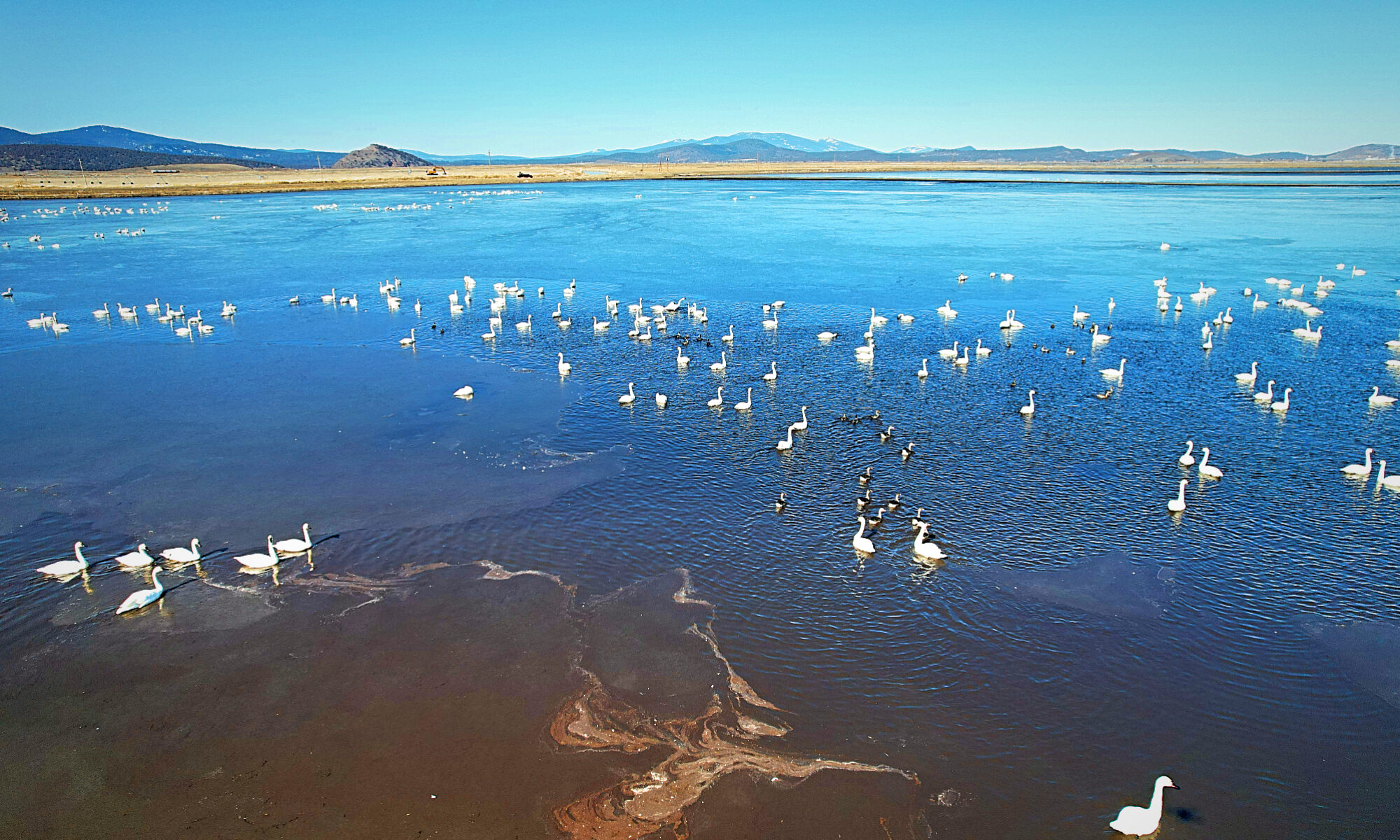
With the refuges of the Klamath Basin getting last in line priority, KDD fields are essentially “the only restaurant in town” for the birds of the Pacific Flyway. Fall harvest has provided much needed food and habitat for songbirds, ducks, geese and cranes. Flooding the fields brings out mice and other prey for for bald eagles and other area raptors to feast on while also decreasing the need for pesticide use. In effect, KDD is the default habitat for migrating birds and other wildlife.
Speaking of the refuges, from December of 2021 through August, 2022, KDD sent approximately 3,100 acre feet of much needed water to the Lower Klamath Lake National Wildlife Refuge. While we can hope that much needed precipitation will help salvage our wetlands, right now, KDD has been the only source of water for the refuge. And without winter flooding, the chances of KDD being able to make water available for the refuge becomes incredibly slim simply from the fact there is no water for KDD to reuse for it.
KDD Winter Flooding and Its Impact on Upper Klamath Lake and the Klamath River
The beauty of maximizing KDD’s winter deliveries is that it has no impact on the fishery. KDD’s allocation is only 2% of the forecasted fall and winter inflows to Upper Klamath Lake. In reality, that is less than 1/10 of a foot on Upper Klamath Lake and 5% of the rate in the Klamath River. On top of that, the Klamath Drainage District has already limited its diversions by 60% to help fill Upper Klamath Lake, and the Klamath River is projected to get 58% of fall/winter inflows.
Fall and winter flooding allows KDD to return that water to the system in the spring when it’s desperately needed for salmon spawning. Plus, in March and April when the demand for Klamath Project irrigators is ramping up, KDD has little to no demand at that time when the district receives its full allocation.
How is this possible? The marshlands reclaimed for farmland from Lower Klamath Lake has acted like a “sponge” for millenia, taking in and holding moisture that would be released later in the spring and summer. As the warmer months of the spring roll, the ground is already charged and ready for the growing season ahead. On the other hand, if these fields weren’t flooded during the fall and winter, KDD patrons’ needs from Upper Klamath Lake would add to the stress on Upper Klamath Lake when other districts are making demands on the lake, and there would be no water to send down the Klamath River to help augment spring spawning flows.
But there is a challenge KDD is facing at the moment – the Bureau of Reclamation’s has taken over 900 acre feet in Area K. With the Bureau taking this water, they’ve left no water in our drains for us to utilize for our patrons, which in turn requires us to take more of our winter allocation in order to meet our landowners’ demand.
KDD’s fall harvest leaves winter feed and habitat for a variety of birds
Winter flooding provides a number of benefits to the Klamath Basin and the Klamath Irrigation Project
The winter fields of KDD offer hunting opportunities for a variety of predators, such as this coyote
KDD Patrons Pay the Bureau of Reclamation for Operating Costs
Klamath Drainage District patrons pay 20% of the operation and maintenance (O&M) on the Link River Dam and Upper Klamath Lake. However, in the past these very patrons have not been eligible for any of the Bureau of Reclamation’s drought programs.
Without any drought assistance funding, KDD patrons become more reliant on irrigating in order to survive year to year. In the past, many KDD patrons have volunteered to set aside thousands of acres in order to help send water down the Klamath River. However, despite that offer, the Bureau of Reclamation still wouldn’t allow these patrons to participate in any drought response agency programs.
KDD continues to do the right thing to the best of its ability and within its legal authority to the benefit of the fish, wildlife, ecosystems, and other basin stakeholders and have made some tremendous partners over the years that share this same vision. If you’re interested in learning more, or interested in partnering with the district on any of the multiple sustainable projects the district is pursuing, the district is always looking for great partnerships.
Geese traveling the Pacific Flyway appreciate the “only restaurant in town”, the Klamath Drainage District